
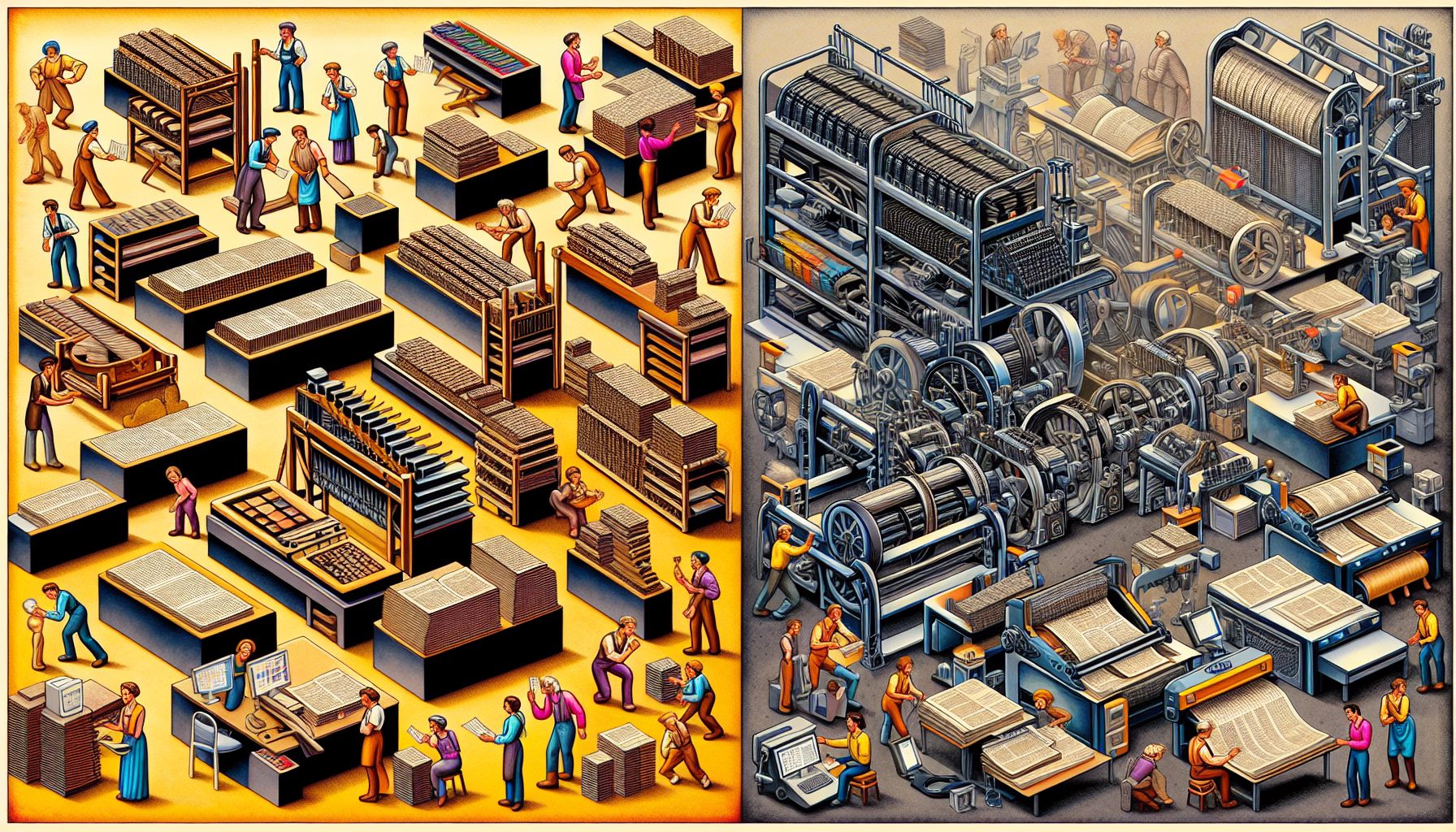
The printing industry has come a long way from its inception. From the Gutenberg press to the digital revolution, printing has witnessed a myriad of changes and advancements over the years. In today’s fast-paced world, where technology is evolving at an unprecedented rate, it is crucial for businesses in the printing industry to stay updated on the emerging trends. In this article, we will explore the latest trends that are shaping the future of the printing industry.
Introduction to Printing Industry Trends
The printing industry, like many others, has experienced disruption due to technological advancements. Traditional printing methods are being replaced by digital alternatives, leading to an increased emphasis on efficiency, sustainability, and customer-centricity.
1. Rise of 3D Printing
One of the most revolutionary advancements in recent years is 3D printing. This technology allows physical objects to be created by layering materials based on a digital design. 3D printing has found applications in various industries, including healthcare, automotive, aerospace, and fashion. Its potential is enormous and is likely to transform the manufacturing landscape.
The benefits of 3D printing are manifold. It offers reduced costs, faster production cycles, greater design flexibility, and the ability to create complex and intricate structures. As the technology continues to evolve and become more affordable, 3D printing is becoming increasingly accessible to businesses and individuals alike.
2. Digital Printing
Digital printing has been gaining popularity over the past decade, replacing traditional offset printing in many instances. With digital printing, businesses can produce high-quality prints quickly and cost-effectively, without the need for printing plates.
The advantages of digital printing include shorter turnaround times, smaller print runs, customization options, and variable data printing. Additionally, digital printing allows businesses to print on a variety of substrates, expanding the possibilities for creative and impactful designs.
3. Sustainable Printing
As environmental concerns gain prominence, the printing industry has been focusing on adopting sustainable practices. From using eco-friendly materials to implementing energy-efficient processes, sustainability has become a top priority for printers.
Many printing companies have shifted to vegetable-based inks, which are more environmentally friendly than their petroleum-based counterparts. Recycling and reusing paper waste, reducing chemical usage, and optimizing energy consumption are some of the initiatives that have been undertaken to minimize the environmental impact of printing.
4. Automation and Workflow Integration
Automation has transformed various industries, and the printing industry is no exception. From robotic printers to automated workflow management, the integration of technology aims to streamline operations, enhance efficiency, and improve accuracy.
Automated devices can handle repetitive tasks, such as color calibration, material handling, and quality control, freeing up human resources for more complex and creative endeavors. Workflow integration software enables seamless communication between different stages of the printing process, reducing errors and minimizing time wastage.
5. Web-to-Print Services
In an era where convenience and speed are paramount, web-to-print services have gained immense popularity. These services allow customers to order and customize print products online, eliminating the need for physical visits to print shops.
Web-to-print platforms offer various features, such as design templates, customization options, and order tracking. The ease of use, accessibility, and quick turnaround times make web-to-print services an attractive option for businesses and individuals seeking professional printing solutions.
6. Augmented Reality (AR) Integration
Augmented Reality (AR) is revolutionizing the printing industry by bridging the gap between the digital and physical worlds. By integrating AR technology into printed materials, businesses can create interactive experiences that engage and captivate audiences.
AR-enabled print can be used for marketing campaigns, product demonstrations, and storytelling. It facilitates immersive experiences by overlaying digital content, such as videos, animations, or 3D models, onto print materials. This integration of AR and print opens up new avenues for creativity and digital engagement.
Conclusion
The printing industry is evolving rapidly, driven by advancements in technology and changing consumer expectations. 3D printing, digital printing, sustainability, automation, web-to-print services, and AR integration are some of the key trends shaping the future of this industry.
To stay competitive, printing businesses must adapt to these trends and embrace the emerging technologies. By leveraging these advancements, printers can deliver high-quality, innovative, and sustainable solutions to meet the evolving needs of their customers.
The future of the printing industry is an exciting space where traditional craftsmanship converges with cutting-edge technology. As we witness the convergence of old and new, it is certain that the industry will continue to evolve, reinvent itself, and play a vital role in meeting the print requirements of our digitized world.