
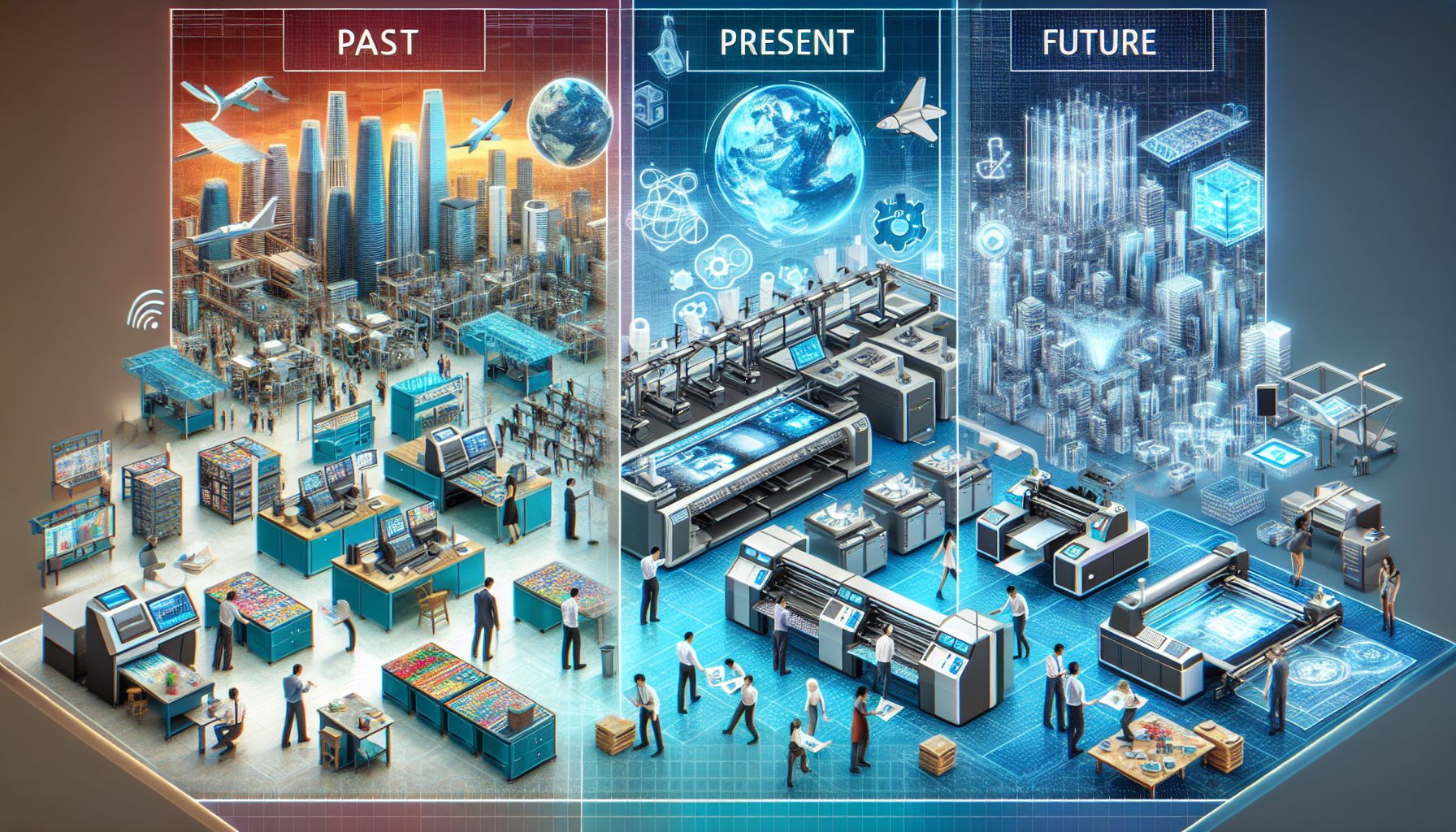
The printing industry has evolved dramatically over the years. Technological advancements have continually influenced production, from the advent of desktop digital printers to more sophisticated 3D capabilities. Several macro trends have emerged that are reshaping the landscape of the printing industry, igniting innovation, and fostering growth.
This article dissects the emerging printing industry trends that are set to impact the future of the sector significantly.
Growth in Digital Printing
Arguably, one of the most impactful trends on the radar is digital printing. As analogue printing methods face obsolescence, digital printing is fast becoming the game-changer within the printing industry, offering appealing advantages such as speed and cost-efficiency.
Digital printing enables on-demand printing, swift turnaround times, and even modification of the image (variable data) used for each impression. The flexibility offered by digital printing aligns with the growing consumer need for personalized and unique prints that traditional printing methods struggle to accommodate.
This shift comes in response to consumer behaviour, tastes, and preferences that increasingly yearn for unique, customized content. This trend enables the production of personalized direct mail, tailored brochures, and specifically branded labels or packaging on a large scale.
Rise Of The Eco-Friendly Printing
Environmental consciousness is continually extending its influence over numerous sectors and the printing industry is no exception. With deforestation, climate change, and the pollution of water bodies taking center stage in global conversations, consumers are increasingly seeking sustainable and eco-friendly solutions.
In response, the printing industry is leaning towards eco-sustainable printing, using recyclable materials and adopting eco-friendly printing processes. For instance, more printers are shifting from using petroleum-based inks to vegetable-based inks. These inks are not only less harmful to the environment but also improve the recyclability of printed paper.
Further, embracing advanced technologies can also contribute to more sustainable printing methods. Thus, many printing companies are investing in environmentally friendly technologies to reduce their carbon footprints and appeal to progressively eco-conscious clientele.
Increased Integration of AI and Automation
Artificial Intelligence (AI) has been revolutionizing several sectors, and the printing industry is primed for its influence. AI, along with automation, is playing a crucial role in improving efficiency, precision, productivity, and reducing waste in printing operations.
AI applications within the printing industry range from the prediction of printing quality, monitoring and controlling printer status, optimizing print performance and quality to predictive maintenance and automated troubleshooting. By integrating AI into their operations, printing companies can significantly reduce operational costs and enhance overall productivity.
Automation, on the other hand, is not an entirely new concept in the printing industry, but its prevalence continues to rise as companies seek to streamline operations, save time, and mitigate human errors.
Advancements in 3D Printing
3D Printing is gaining immense traction across various industries. Although initially popularised in manufacturing, 3D Printing has also penetrated the printing industry, igniting a new era of possibilities.
The advent of 3D printing offers prospects unheard of in the printing industry such as the possibility of printing wearable clothing, prosthetics, and even structures! With ongoing technological advancements, it’s clear that the applications of 3D printing in the industry are bound to increase.
Conclusion: A Future-Focused Printing Industry
From this examination, it’s evident that technology plays a central role in the trends shaping the printing industry. The increasing shift towards digital printing, AI and automation, sustainable practices, and the adoption of 3D printing technologies signal a future-focused industry.
The embrace of these trends, however, registers varying degrees across different region. Factors such as the market dynamics, the regulatory landscape and the level of technological adoption shape the speed and extent of these trends.
For the printing companies, acknowledging and adjusting to these trends will be integral for their survival and prosperity. As the industry navigates through the wave of these changes, the true winners will be the companies that anticipate these trends and adapt in time to meet their customers’ evolving demands.
As consumers, we can only expect the continuous improvement and personalization of print products. More importantly, it’s encouraging to see an industry that has been a large contributor to environmental degradation in the past, now adopting greener practices. In an age where sustainability is increasingly at the heart of global discourse, this is truly laudable.
Lastly, the intersection of AI, automation and 3D technology within the printing industry signals an exciting future. As we continue to understand and harness these technologies, the only assurance is that the capabilities of printing remain on an upward growth trajectory.