
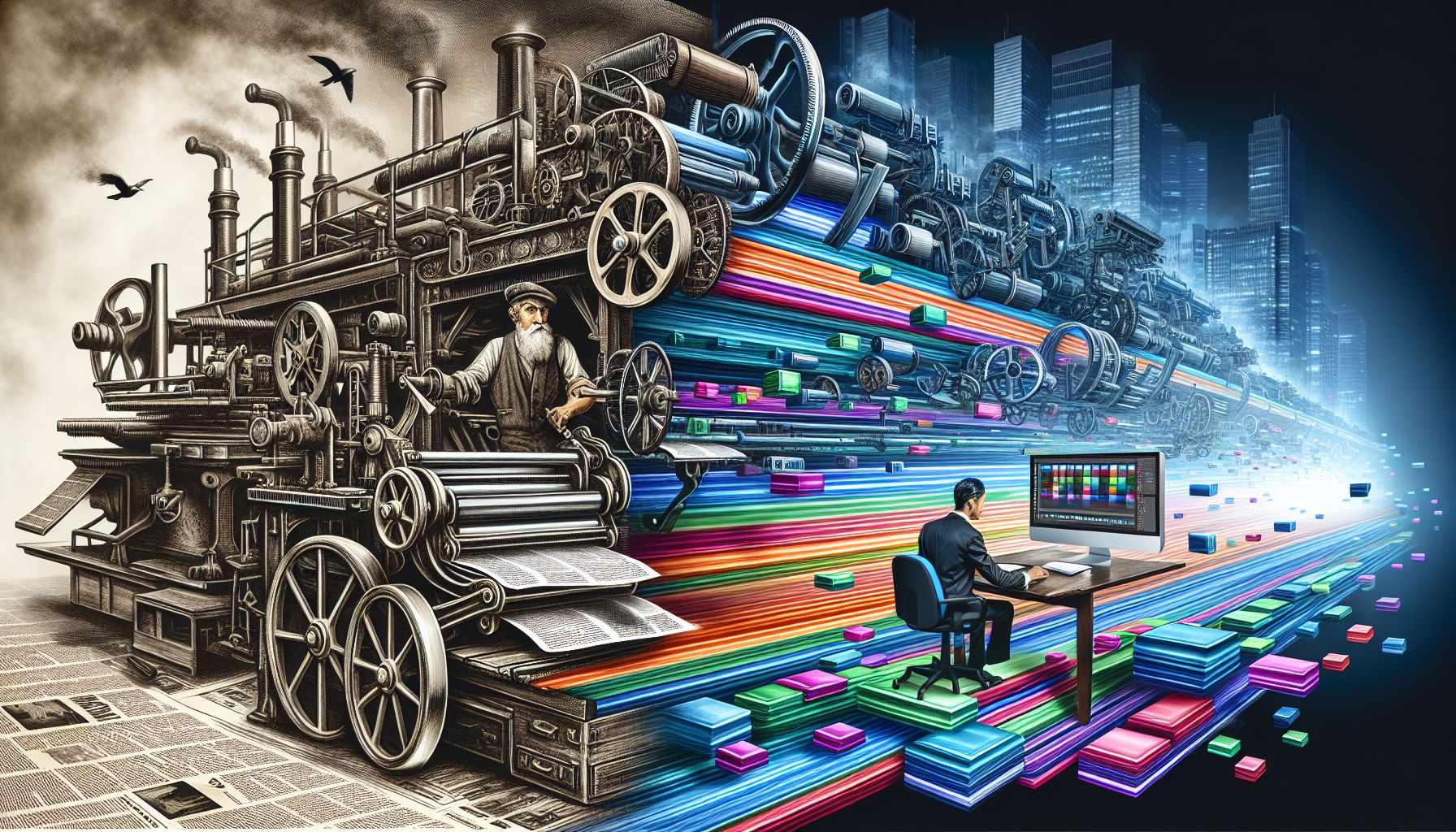
The printing industry has undergone significant transformations over the past decade, responding to the advancements of technology and changes in consumer behavior. From offset printing to digital printing, the industry has adapted to meet the demands of a rapidly evolving marketplace. In this blog post, we will explore the latest trends in the printing industry, highlighting the innovations shaping its future.
Introduction
Once considered a traditional and conservative sector, the printing industry has been forced to embrace technological advancements to stay relevant in a digital age. The rise of the internet and digital media has undoubtedly impacted the way information is disseminated and consumed. However, the printing industry has managed to adapt, reinvent itself, and remain a crucial player in various domains such as publishing, packaging, and marketing.
Digital Printing: A Game-Changer
Digital printing has revolutionized the printing industry by streamlining production processes, reducing costs, and enabling mass customization. Unlike traditional methods like offset printing, which require the creation of printing plates, digital printing allows for on-demand printing and eliminates the need for extensive setup time.
The adoption of digital printing has enabled businesses and individuals to print smaller quantities economically, making it particularly attractive for targeted marketing campaigns and personalized communication. Additionally, it offers the flexibility to quickly modify and update printed materials in response to changing market conditions or design requirements.
Sustainability and Eco-Friendly Practices
Sustainability has become a driving force behind industry trends across various sectors, and the printing industry is no exception. Print service providers are increasingly embracing environmentally friendly practices to reduce their carbon footprint and appeal to eco-conscious consumers. This includes the use of recycled paper and soy-based inks, as well as implementing energy-efficient technologies and waste reduction strategies.
Furthermore, advancements in printing technology have allowed for more efficient ink usage, minimizing waste and reducing overall environmental impact. The shift towards sustainable practices not only aligns with consumer expectations but also presents significant cost savings for businesses in the long run.
3D Printing: Unlocking Endless Possibilities
While still in its early stages, 3D printing has the potential to disrupt the entire printing industry. This revolutionary technology enables the creation of three-dimensional objects by layering materials on top of each other based on a digital model. It has gained traction in various sectors, including architecture, healthcare, and manufacturing.
The ability to print fully functional prototypes and custom-made products has opened up new possibilities for designers, engineers, and researchers. This technology allows for rapid iteration and product development, reducing time-to-market and optimizing supply chains. As 3D printing continues to evolve, its impact on the printing industry is expected to expand, bringing forth new business models and opportunities.
Augmented Reality: Merging Physical and Digital
Augmented Reality (AR) has been a rising trend in recent years, and its integration with printed materials has given birth to a new form of interactive and immersive experience. By leveraging AR technology, brands can bring static printed content to life, engaging audiences in new and exciting ways.
Printed materials, such as brochures and packaging, can be enhanced with AR elements, such as 3D models, animations, and interactive features. This not only captures user attention but also provides an opportunity to deliver additional information, track user engagement, and drive sales. AR also enables companies to bridge the gap between digital and physical marketing strategies, creating seamless and memorable brand experiences.
Web-to-Print: Convenience at Your Fingertips
As online shopping continues to grow in popularity, the printing industry has integrated web-to-print solutions to cater to the changing needs of consumers. Web-to-print allows customers to design, customize, and order printed materials online, providing a convenient and user-friendly experience.
Print service providers have developed intuitive online platforms that empower users to create personalized business cards, stationery, promotional materials, and more. This digital transformation of the printing industry not only simplifies the ordering process but also offers real-time previews and instant price quotes, empowering customers and reducing turnaround times.
Conclusion
The printing industry is far from becoming obsolete. Instead, it has embraced technological advancements, reinvented itself, and adapted to the demands of a digital world. Digital printing has revolutionized production processes and enabled mass customization, while sustainability practices have become vital for both the environment and business growth. The rise of 3D printing and augmented reality has unlocked endless possibilities, merging physical and digital realms. Additionally, web-to-print solutions offer convenience and streamline the ordering process, ensuring that the printing industry remains an essential part of our lives.
As technology continues to advance and consumer preferences evolve, the printing industry will undoubtedly face new challenges and opportunities. Embracing innovation, adaptability, and sustainability will be crucial for print service providers to thrive in this ever-changing landscape.