
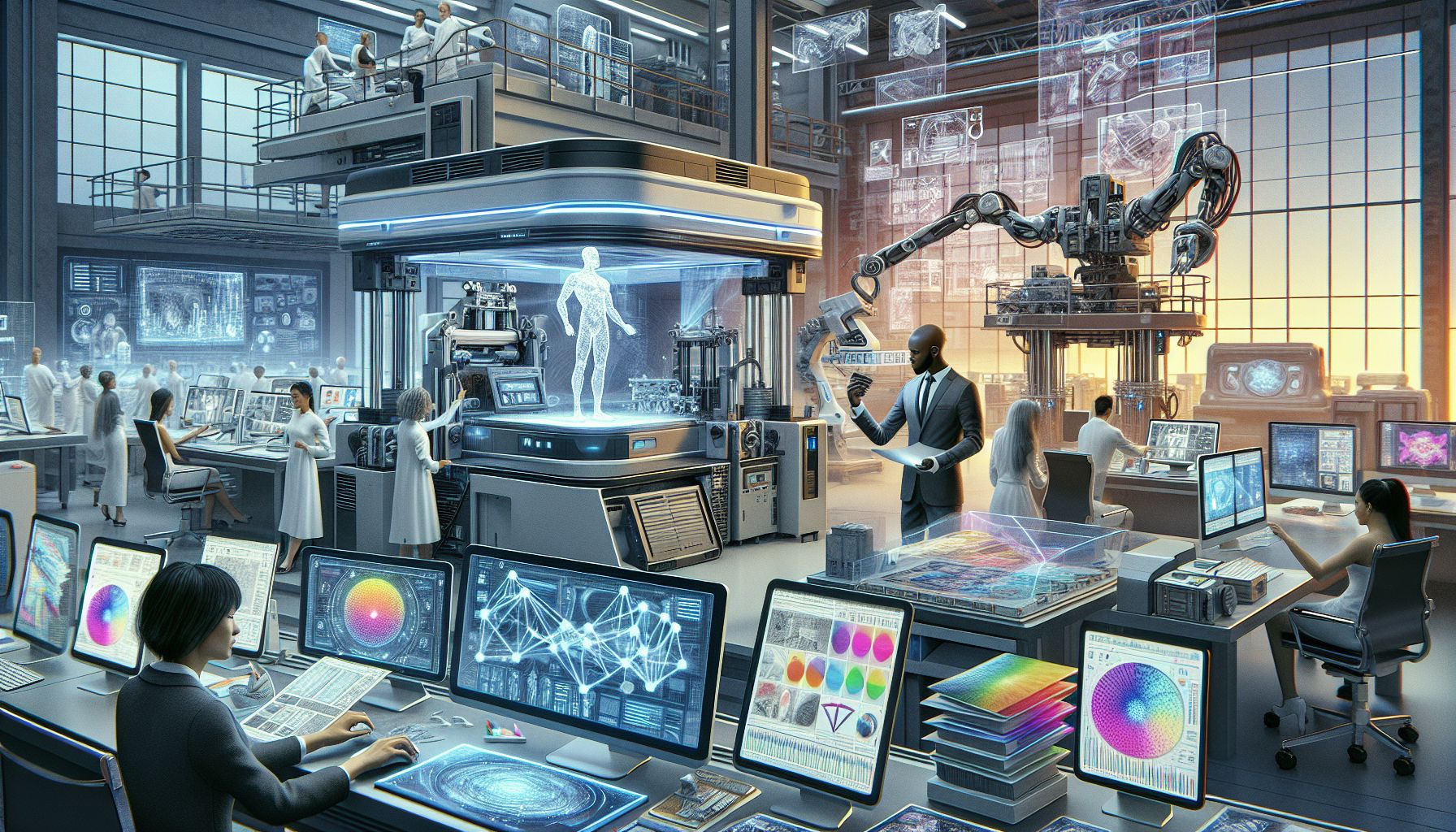
The printing industry has transformed significantly over the past decade, driven by technological advancements and changing consumer preferences. As we move further into the digital age, printing has shifted from being solely a physical medium to a combination of both print and digital platforms. In this blog post, we will explore the latest trends that are shaping the future of the printing industry and discuss how businesses can adapt to stay ahead in this rapidly evolving landscape.
Introduction: The Evolution of Printing Industry
Printing, as an industry, has come a long way since the invention of the printing press by Johannes Gutenberg. It revolutionized communication by making the mass production of books and newspapers possible. However, with the digital revolution, printing faced new challenges and had to reinvent itself to stay relevant.
While the rise of digital media initially posed a threat to the printing industry, it has also opened up new avenues for growth. Today, printing is no longer limited to traditional paper printing but also includes digital printing, wide-format printing, and 3D printing, among others. These emerging technologies have not only broadened the scope for the printing industry but have also transformed the way businesses and individuals communicate.
The Latest Trends Shaping the Printing Industry
1. Digital Printing Takes Center Stage
Digital printing has gained immense popularity due to its cost-effectiveness, flexibility, and faster turnaround time. Unlike traditional printing methods, digital printing allows for on-demand printing and personalization, making it highly suitable for small print runs and targeted marketing campaigns. With advancements in digital printing technology, the quality of digital prints has also significantly improved, and this trend is expected to continue.
2. Increased Demand for Personalization
In today’s digital age, consumers expect personalized experiences, and printing is no exception. Customization and personalization have become crucial for businesses to stand out and engage their target audience effectively. From personalized direct mail campaigns to customized packaging, the demand for unique and tailored printing solutions is on the rise. This has led to the development of variable data printing (VDP) techniques, enabling the printing of personalized content and graphics on a large scale.
3. Sustainability and Eco-Friendly Printing
As environmental concerns become more prominent, the printing industry has been striving to adopt greener practices. The demand for eco-friendly printing solutions, such as soy-based inks and recycled paper, has grown significantly. Printing companies are increasingly investing in sustainable technologies and practices to reduce their carbon footprint. Furthermore, digital printing techniques, such as print-on-demand, minimize waste by allowing for shorter print runs and reducing excess inventory.
4. Integration of Augmented Reality (AR) and Virtual Reality (VR)
The integration of augmented reality (AR) and virtual reality (VR) technologies has revolutionized the way consumers interact with print media. AR and VR can create immersive experiences by overlaying digital content onto physical prints, blurring the boundaries between the physical and digital worlds. This trend has opened up new possibilities for marketers and advertisers to create interactive and engaging printed materials that provide a unique user experience.
5. 3D Printing for Prototyping and Manufacturing
The emergence of 3D printing technology has disrupted various industries, including manufacturing and prototyping. 3D printing allows for the creation of three-dimensional objects through additive manufacturing techniques. This technology is increasingly being used in industries such as automotive, aerospace, healthcare, and fashion, enabling rapid prototyping and customization. While 3D printing is still in its infancy, its potential impact on the printing industry is significant.
6. Internet of Things (IoT) and Smart Printing
The Internet of Things (IoT) has revolutionized the printing industry by enabling smart printing solutions. IoT-connected printers can communicate with other devices, such as computers and smartphones, to streamline printing processes and enhance efficiency. For example, IoT-enabled printers can automatically detect low ink levels and reorder supplies, reducing downtime and improving productivity. As IoT continues to evolve, we can expect further integration of printing devices into the connected ecosystem.
7. The Rise of Web-to-Print Services
Web-to-print services have gained traction in recent years, allowing customers to design, customize, and order print products online. This technology simplifies the printing process by eliminating the need for face-to-face interactions with print service providers. With web-to-print services, customers can easily upload their designs, select printing options, and place orders from the comfort of their homes or offices. The convenience, speed, and cost-effectiveness offered by web-to-print services are reshaping the printing industry.
8. Embracing Automation and Artificial Intelligence (AI)
Automation and artificial intelligence (AI) are transforming various industries, and the printing industry is no exception. Robotic systems and AI algorithms are being integrated into printing workflows to improve accuracy, reduce manual intervention, and enhance productivity. Automated printing processes not only save time but also reduce costs and minimize errors. AI-powered solutions can also analyze data to provide valuable insights for optimizing printing operations.
Conclusion: Navigating the Changing Landscape
The printing industry continues to evolve as it adapts to technological advancements and changing consumer expectations. The trends mentioned above are shaping the future of printing, offering new opportunities for businesses to innovate and grow. To stay ahead in this rapidly changing landscape, printing companies must embrace digital printing technologies, focus on personalization and sustainability, explore new applications of AR and VR, leverage 3D printing for prototyping, adopt IoT for smart printing solutions, harness the potential of web-to-print services, and integrate automation and AI into their workflows.
As the printing industry continues to bridge the gap between the physical and digital worlds, it is essential for businesses to embrace these trends and leverage them to their advantage. By understanding the evolving needs of consumers and staying abreast of technological advancements, printing businesses can thrive in an ever-changing marketplace.