
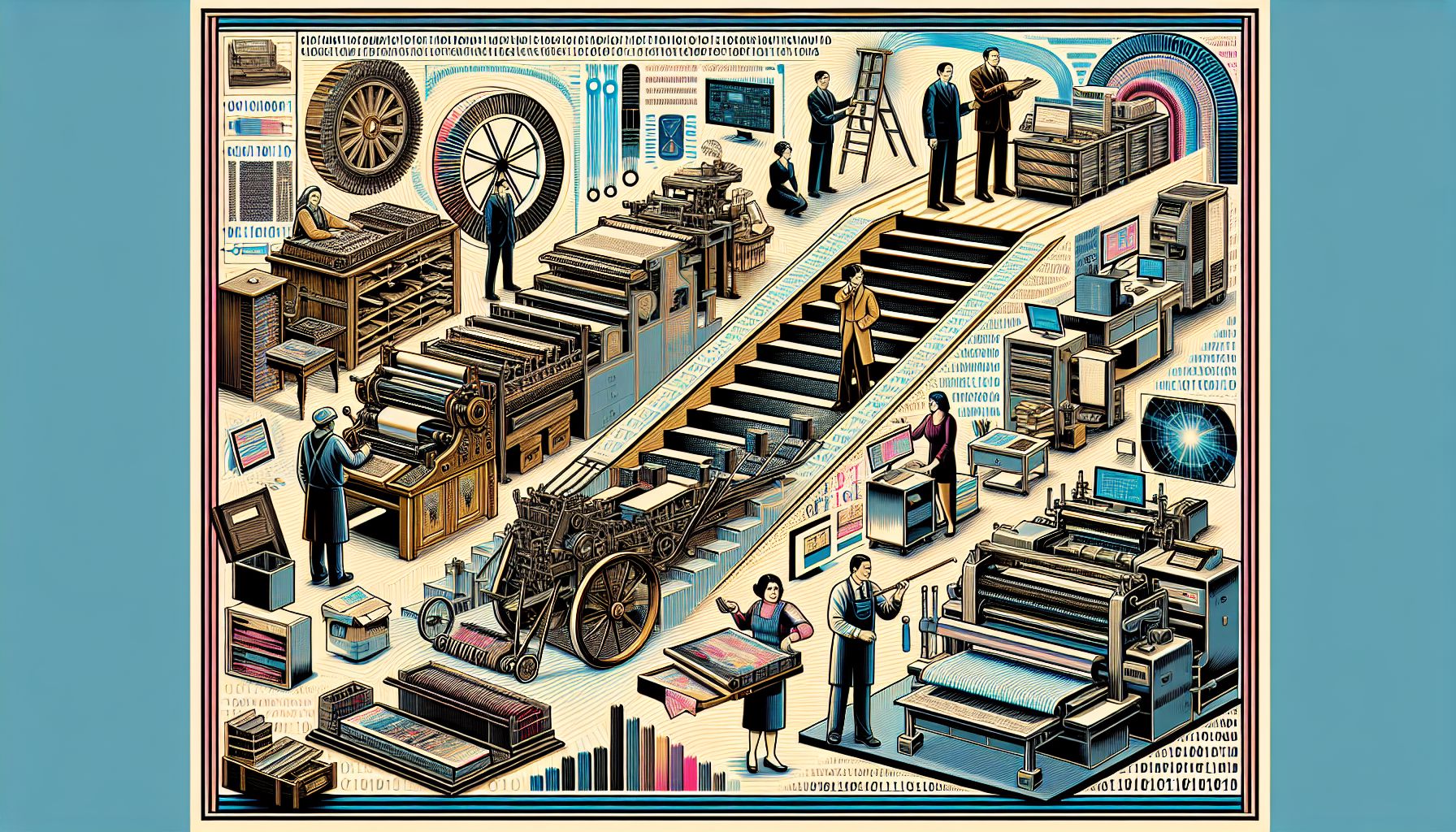
The printing industry has come a long way since its inception. From the invention of the printing press by Johannes Gutenberg in the 15th century to the digital revolution of the 21st century, the industry has constantly evolved to meet changing demands. In recent years, the advent of new technologies and shifts in consumer behavior have brought about several trends that are shaping the future of the printing industry. This article explores some of the latest trends in the printing industry and how businesses within this sector are adapting to a digital world.
Introduction to the Printing Industry
Before delving into the trends, it is crucial to understand the printing industry’s fundamental aspects. The printing industry encompasses a broad range of activities, including desktop publishing, commercial printing, digital printing, and more. It serves various sectors such as advertising, publishing, packaging, education, and many others. The primary objective of this industry is to reproduce text, images, or designs onto different surfaces, such as paper, fabric, plastic, or metal.
Embracing Digital Printing
One of the most significant trends in the printing industry is the rise of digital printing. Traditional forms of printing, like offset printing, relied on the use of printing plates and involved a complex setup process. Digital printing, on the other hand, allows for a faster and more cost-effective production method. It offers short-run capability, variable data printing, and on-demand printing. Digital printing has gained popularity because it is highly flexible, efficient, and environmentally friendly.
With the advent of high-quality digital printers, businesses can now personalize their prints and cater to individual customer preferences. Variable data printing allows for the customization of each printed piece, making marketing campaigns more targeted and effective. The ability to print on-demand reduces waste and excess inventory while allowing businesses to quickly respond to market demands.
Sustainable Practices and Eco-friendly Materials
As environmental concerns continue to grow, the printing industry has also embraced sustainable practices. The use of eco-friendly materials, such as recycled paper and biodegradable inks, has become more common. Companies are increasingly adopting energy-efficient printing equipment and reducing their carbon footprint. The demand for eco-friendly printing options has been driven primarily by consumers who are increasingly conscious about the environmental impact of their purchasing choices.
Additionally, the concept of green printing has gained traction, focusing on reducing waste and recycling. By optimizing designs to minimize ink and paper usage, businesses can significantly reduce their environmental impact. Sustainable printing practices not only help conserve natural resources but also enhance a company’s reputation as an environmentally responsible entity.
Augmented Reality and Interactive Printing
The integration of technology into the printing industry has opened up new possibilities. Augmented Reality (AR) has gained attention as a powerful tool for enhancing printed materials. By scanning a printed image with a smartphone or tablet, users can access additional digital content, such as videos, animations, or interactive elements. This merging of print and digital has created an immersive experience that attracts and engages users in unique ways.
Interactive printing goes beyond just AR. Some companies are using conductive inks to create touch-sensitive prints. These prints can respond to touch, effectively turning them into interactive interfaces. Such innovations have found applications in areas like advertising, packaging, and education, where engaging with printed materials in novel ways has become more prevalent.
3D Printing and Prototyping
Another trend disrupting the printing industry is the rise of 3D printing. Although still relatively new, 3D printing technology has shown immense potential in various fields. This technology allows for the creation of three-dimensional objects based on digital designs. As the technology improves and becomes more accessible, it has the potential to revolutionize manufacturing and supply chains.
In the printing industry, 3D printing enables the production of prototypes, customized products, and small-scale manufacturing. This technology offers the advantage of reduced time to market, lower costs for prototyping, and the ability to create complex designs that would be challenging or costly using traditional methods. As 3D printing continues to evolve, it may soon become an integral part of the printing industry, opening up new avenues for innovation and creativity.
E-commerce and Online Printing Services
The rise of e-commerce has had a profound impact on various industries, and printing is no exception. Online printing services have become increasingly popular, allowing customers to order prints conveniently from their homes or offices. This trend has given rise to web-to-print platforms that enable businesses and individuals to upload their designs, select printing options, and place orders online.
The convenience and accessibility of online printing services have democratized the printing industry. Smaller businesses and individuals can now access professional printing services without the need for large investments in printing equipment. This direct-to-customer approach has also led to increased competition among printing service providers, driving innovation and improving customer service.
Conclusion
The printing industry is constantly evolving to meet the demands of a digital world. Trends such as digital printing, sustainable practices, augmented reality, 3D printing, and e-commerce have redefined the way companies within this industry operate. Embracing these trends allows businesses to stay competitive, adapt to changing consumer needs, and leverage technology to enhance their printing capabilities.
The future of the printing industry lies in its ability to seamlessly integrate print and digital, offer personalized and interactive experiences, adopt sustainable practices, and embrace emerging technologies. As technology advances, it is an exciting time for the printing industry, presenting countless opportunities for growth, innovation, and creativity.